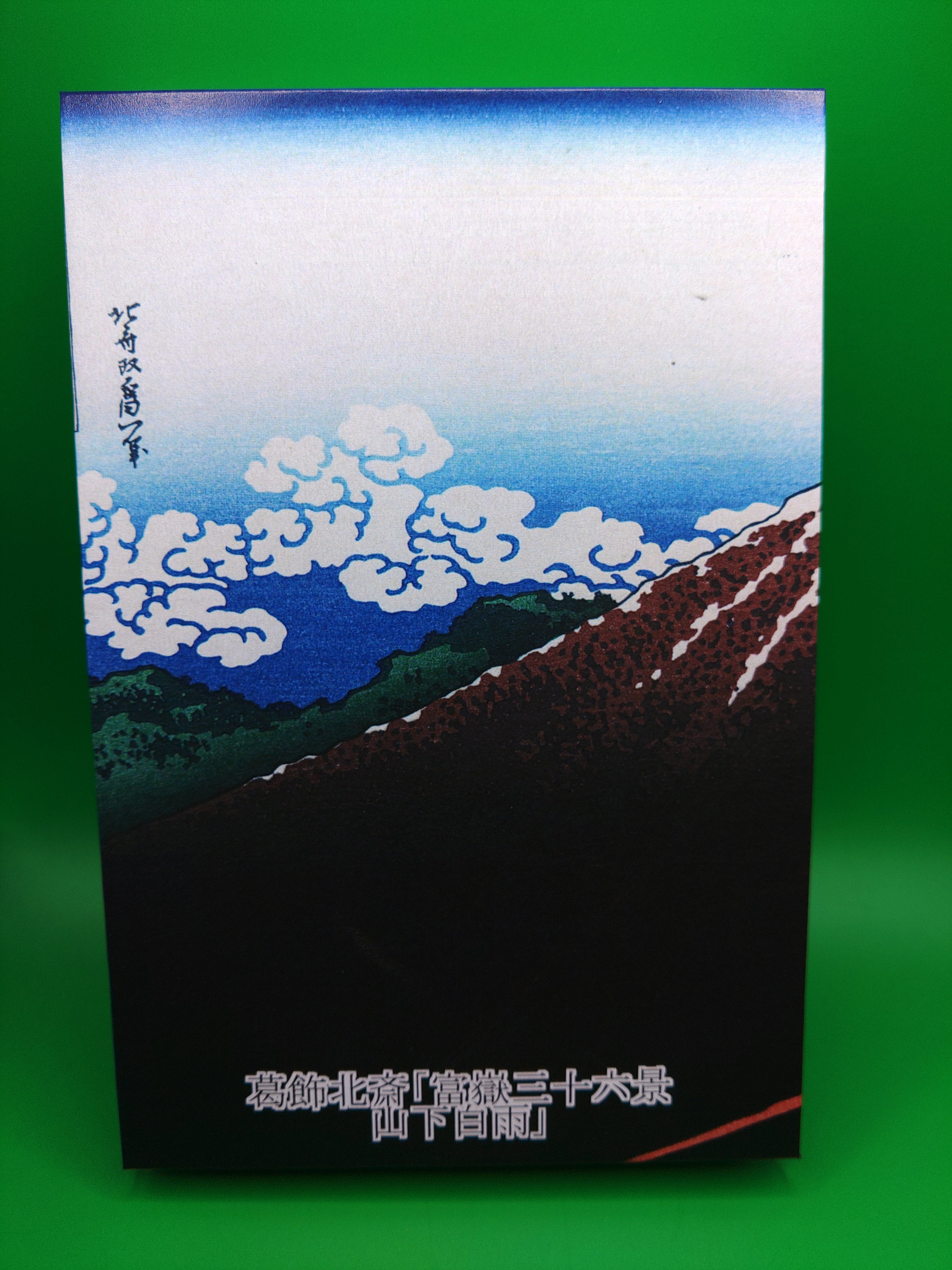
御朱印帳 No015葛飾北斎「富嶽三十六景 山下白雨」 48ページ
¥1,980($12.49)
International shipping available
120mmx180mmの御朱印帳です
表紙は厚み3mmに上質紙使用
中身はかなりしっかりした和紙を使用しています
ページ数は標準の48ページ
表紙は葛飾北斎「富嶽三十六景 山下白雨」です
《神奈川沖浪裏》や《凱風快晴》と並び、本作《山下白雨》は、《富嶽三十六景》シリーズを代表する三大傑作の一つとして高く評価されています。「白雨(しらあめ)」とは、夏の空に突然訪れる激しい夕立を意味し、その一瞬の劇的な気配が画面全体に込められています。
画面上部では、富士山の山頂が静かな晴天の光に包まれている一方、山麓には重く垂れ込めた黒雲が広がり、深い闇が大地を覆っています。その対比の中を、鋭く走る一本の稲妻が空を切り裂き、自然の圧倒的な力を印象づけます。静寂に満ちた富士の姿と、激しく荒れ狂う天候の動きが同時に存在する構図は、北斎ならではの大胆な感性によって成立しており、単なる風景画を超えた精神性すら感じさせます。
特に注目すべきは、富士山そのものが嵐に動じることなく、あくまで悠然とそびえ立っている点です。周囲では雷鳴と豪雨が荒れ狂っているにもかかわらず、富士は静かにその姿を保ち続けています。この「不動」と「激動」の対比こそが、《山下白雨》を傑作たらしめている最大の魅力と言えるでしょう。
また、《富嶽百景》に収録された「山下白雨」では、視点がさらに山麓の村へと移され、人々の暮らしと自然との関係性がより身近に描かれています。飛行機も存在しなかった江戸時代に、北斎がこれほど多彩な角度や距離感から富士山を構想し描き分けていたことには、改めて驚かされます。彼は単に富士山を「見る」のではなく、想像力によって空間そのものを自在に操っていたのでしょう。
さらに、本作は摺りの状態によって印象が大きく異なることでも知られています。「山下白雨」は人気作品であったため数多く摺られましたが、その過程で版木が摩耗し、主版や色版の細部が失われたものが多く存在します。山頂中央に見られる茶色の点が消えていたり、「筆」印の下部が欠けていたりする例も確認されています。そのため、初摺に近い状態を良好に保った作品は極めて貴重とされ、美術的価値も非常に高く評価されています。
加えて、後摺になると山麓部分に松の木が描き加えられる場合があり、摺りの時期による変化を比較できる点も興味深い特徴です。こうした違いを見比べることで、一枚の版画が時代とともにどのように変化していったのかを知ることができ、浮世絵版画ならではの奥深い魅力を味わうことができます。
Alongside *The Great Wave off Kanagawa* and *Clear Sky with a South Wind*, this work, *White Rain at the Foot of the Mountain*, is highly regarded as one of the three masterpieces that represent the *Thirty-Six Views of Mount Fuji* series. “White Rain” refers to a sudden, violent summer thunderstorm, and the dramatic atmosphere of that fleeting moment is captured throughout the entire composition.
At the top of the composition, the summit of Mount Fuji is bathed in the serene light of a clear sky, while at the foot of the mountain, heavy, low-hanging black clouds spread out, casting a deep darkness over the land. Amidst this contrast, a single bolt of lightning cuts sharply through the sky, impressing upon the viewer the overwhelming power of nature. The composition, in which the serene figure of Mount Fuji coexists with the violent, raging weather, is made possible by Hokusai’s uniquely bold sensibility, evoking a spirituality that transcends mere landscape painting.
Particularly noteworthy is the fact that Mount Fuji itself remains undisturbed by the storm, standing tall and serene. Despite the thunder and torrential rain raging all around, Fuji quietly maintains its composure. It is this contrast between “immobility” and “turmoil” that is arguably the greatest charm making “White Rain at the Foot of the Mountain” a masterpiece.
Furthermore, in the version of “White Rain at the Foot of the Mountain” included in *One Hundred Views of Mount Fuji*, the viewpoint shifts even further down to the village at the mountain’s base, depicting the relationship between people’s lives and nature in a more intimate way. It is truly astonishing to realize that during the Edo period, when airplanes did not yet exist, Hokusai was able to conceive of and depict Mount Fuji from such a diverse range of angles and perspectives. He did not simply “see” Mount Fuji; rather, he freely manipulated space itself through his imagination.
Furthermore, this work is known for how significantly its impression varies depending on the condition of the print. Because “Shirau under the Mountain” was a popular work, it was printed in large numbers; however, during this process, the woodblocks wore down, resulting in many prints where details on the main and color blocks were lost. Examples have been found where the brown dot visible at the center of the summit has disappeared or the lower part of the “brush” mark is missing. Consequently, works that have retained a condition close to that of the first print are considered extremely rare and are highly valued for their artistic merit.
Furthermore, in later prints, pine trees are sometimes added to the base of the mountain, making it an interesting feature to compare the changes depending on the printing period. By comparing these differences, one can understand how a single woodblock print evolved over time and appreciate the profound charm unique to ukiyo-e woodblock prints.